Balance in healthcare conversations – do we talk about this enough?
2/09/26
Have you ever felt rushed or unheard by a doctor, nurse or allied health professional? It can make you feel worried and powerless. Good healthcare should put the person receiving the care at the centre – their stories, beliefs, and needs.
It’s important for health professionals to listen carefully and explain things clearly, not just tell people what to do. Balanced conversations are about sharing ideas and building trust. A balanced conversation should feel like a partnership, where both you and your health professional work together. This helps you and your family feel cared for and respected.
Experiencing an imbalanced healthcare conversation
You may have experienced a feeling of imbalance during a conversation with a health professional.
The doctor who talks right over you. The nurse who starts a procedure without looking at you or explaining what’s happening. The allied health professional who keeps churning through activity after activity without noticing how disconnected you are from the whole process.
I once attended a multidisciplinary clinic for children, and everything felt profoundly unbalanced. There was little information provided before the appointment, leaving the family with no idea what to expect. The room was crowded with unknown health professionals, who bombarded the family with questions. No one explained their roles, the process, or what the family could anticipate. I witnessed a ten-minute gauntlet of questions and answers. The checklist mattered more than the little person sitting quietly at the front of the room.
At the end of the appointment, the child walked out reportedly feeling scared. The family walked out disappointed, saying they felt unheard.
Imbalance in healthcare conversations happens in moments like these, when you feel rushed or disregarded in a tick box-dependent system. Research shows that when people are not informed or acknowledged in their healthcare journey, they experience confusion, anxiety, or withdrawal (Van Der Ploeg-Dorhout et al., 2024).
Finding balance in healthcare conversations is crucial to ensuring that people view interventions as worthwhile. During research for my PhD, the occupational therapists I interviewed offered valuable insights into how to create balance in healthcare.
I’ve summarised these insights into three key themes:
1. Centring the client
In theory, the person receiving care should always be at the centre of healthcare conversations. They are the one whose body, experience, and wellbeing are being discussed. Yet, in practice, the centre of healthcare conversations may shift without anyone noticing. Sometimes it becomes the clinician: “You should do this.” Other times, it’s the organisation: “This is how things have always been done.” Or perhaps it shifts due to time or funding pressures: “We don’t have time to help you, sorry.”
When this happens, you may start to feel passive and helpless rather than being an active participant in your own healthcare. The literature emphasises that meaningful care emerges when time, careful communication and building trust are invested into a health care interaction (Tian et al., 2024). The therapists in my PhD research study reported using multiple ways of centring their clients’ experiences, such as asking the open-ended question: “What is most important for [you] to get back to?” (P11, Acute and Emergency)(So et al., 2025a, p. 6).
Several movements in healthcare, such as person-centred care and trauma-informed care, touch on a similar truth: care improves when the person is not talked about but collaborated with (Berring et al., 2024; Parker & Sutherland, 2021).
Placing the person at the centre of healthcare conversations means:
- Your story matters.
- Your language, culture, beliefs and values are respected in the conversation.
- Your questions and concerns are treated as valid information.
This doesn’t remove clinical expertise. Instead, it creates space where both forms of knowledge – professional and lived experience – can meet. This fosters a collaborative approach rather than a directive one.

2. Balance in speaking
Health professional words have the potential to educate and empower, but they may also overwhelm or minimise. Too often, healthcare conversations tend towards information overload. Clinicians may speak too much, explaining everything they know about a diagnosis, the risks, the options, and the procedures. Yet, research shows that people often forget a large proportion of what clinicians attempt to discuss with them (Egenberg, Lie, Gerwing, & Menichetti, 2025).
Balanced health professional speaking may be more effective when it aims for clarity without overload.
During a health professional conversation, it may help to:
- Come with pre-written questions
- Ask for clarification regarding medical jargon
- Ask for the conversation to happen at another time, or with a support person, if you are too overwhelmed, upset or in pain
When health professional speaking is balanced, you should feel informed rather than overwhelmed. You should leave the conversation feeling more empowered, rather than being overpowered by clinical jargon.
3. Balance in listening
Listening is where understanding begins. Yet it is frequently sacrificed in busy clinical environments. That’s because balanced listening requires time, presence, and curiosity (Epstein & Beach, 2023). Imbalanced listening can appear as though a health professional may be listening only long enough to respond, listening to confirm assumptions, or listening only to medical facts rather than personal meaning.
During a health professional conversation, it may help to talk about:
- “This is what matters most to me right now…”
- “This is what my experience has been like so far…”
- “This is what I am worried about…”
Raising these topics may help you to discuss the concerns that matter to you, as well as those that matter to the health professional. It helps form a space for balanced speaking and listening in the healthcare conversation. Therapists in my PhD study talked about the importance of hearing the holistic needs of the person, as “‘creating the space to be a really active listener is … the starting point …’” (P11, Acute and Emergency)(So et al., 2025a, p. 6)
When listening is balanced, the person at the centre of the healthcare journey will feel better understood.
Bringing these three elements together
When the person is at the centre, and health professional speaking and listening are in balance, healthcare can become more human. Conversations can become increasingly collaborative spaces where knowledge in enabled to flow in both directions. Trust may be strengthened, and decisions may feel shared.
Finding this balance is an ongoing work. It requires time and funding allowance, as well as patience and practice. But its impact is powerful. Balanced healthcare conversations help lead to healthcare relationships where people feel genuinely cared for.
In the end, balance in healthcare – that acknowledges the whole person – is not for the privileged few. It is essential for good healthcare.
Let’s stay connected
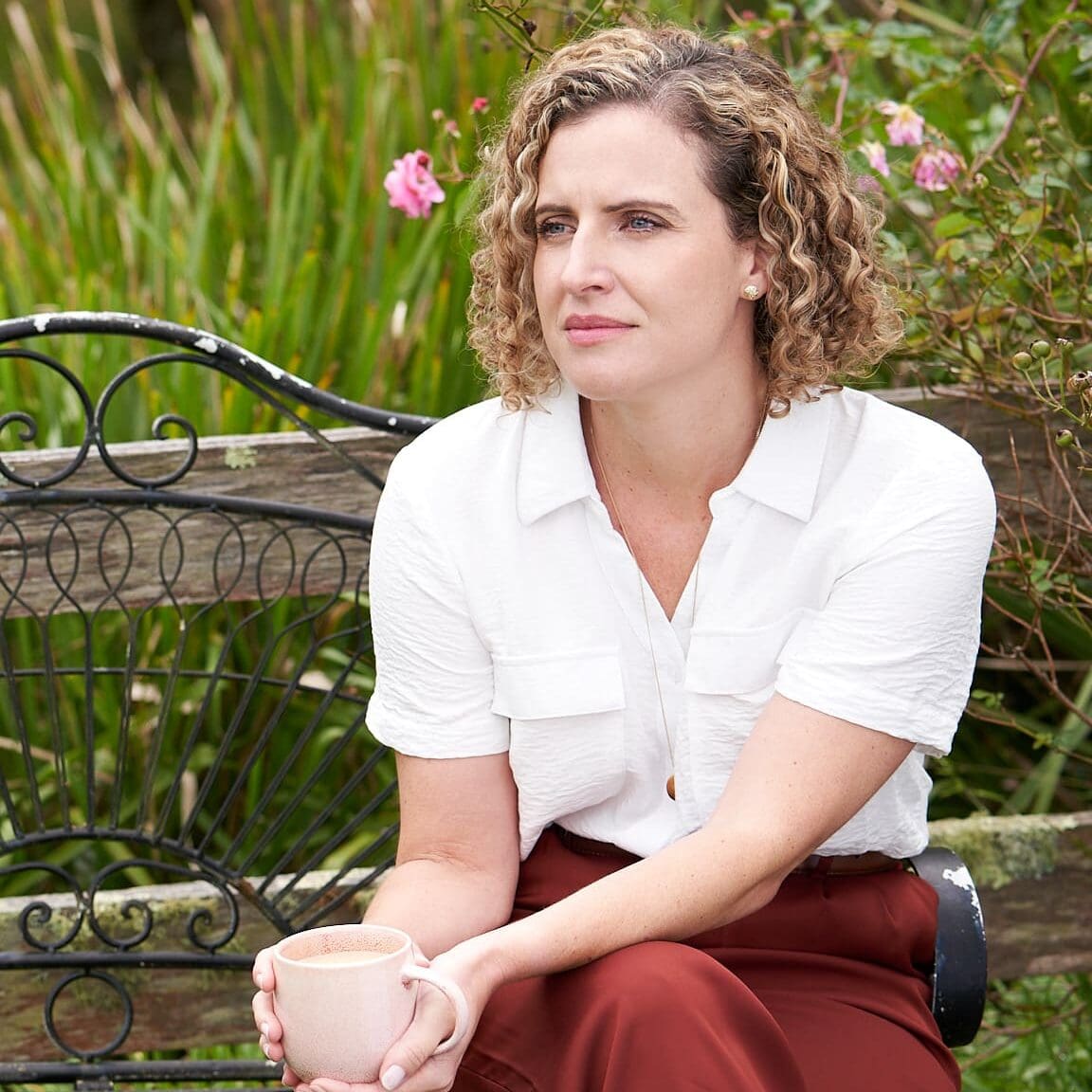
I’m Heather So, and I’m passionate about bringing spirituality and the whole person into the healthcare conversation. You are welcome to explore my services for healthcare professionals, learn more about my academic work in this field, and read my book: The Suffering of a Child.
Remember to follow along on Facebook and Instagram.
References:
Berring, L., Holm, T., Hansen, J., Delcomyn, C., Søndergaard, R., & Hvidhjelm, J. (2024). Implementing trauma-informed care—Settings, definitions, interventions, measures, and implementation across settings: A Scoping Review. Healthcare, 12(9), 908. doi:10.3390/healthcare12090908
Egenberg, H., Lie, H., Gerwing, J., & Menichetti, J. (2025). Expert recommendations on sharing medical information with patients: a qualitative study. BMC Health Services Research, 25(1), 1137. doi:10.1186/s12913-025-13223-5
Epstein, R., & Beach, M. (2023). “I don’t need your pills, I need your attention:” Steps toward deep listening in medical encounters. Current Opinion in Psychology, 53, 101685. doi:https://doi.org/10.1016/j.copsyc.2023.101685
Parker, D., & Sutherland, C. (2021). The person-centred frame of reference. In E. Duncan (Ed.), Foundations for Practice in Occupational Therapy (6th ed., pp. 128-140). Edinburgh: Elsevier.
So, H., Mackenzie, L., Chapparo, C., Ranka, J., & McColl, M. A. (2023). Spirituality in Australian health professional practice: A scoping review and qualitative synthesis of findings. Journal of Religion and Health, 62(4), 2297-2322. doi:10.1007/s10943-023-01840-5
So, H., Mackenzie, L., Chapparo, C., Ranka, J., & McColl, M. A. (2025a). Addressing client spirituality in occupational therapy practice: A qualitative study. Australian Occupational Therapy Journal, 72(3), e70034. doi:https://doi.org/10.1111/1440-1630.70034
So, H., Mackenzie, L., Chapparo, C., Ranka, J., & McColl, M. A. (2025b). How spirituality is understood in occupational therapy: A qualitative study. Australian Occupational Therapy Journal, 72(2), e70006. doi:https://doi.org/10.1111/1440-1630.70006
Tian, C., Wong, E., Qiu, H., Zhao, S., Wang, K., Cheung, A., & Yeoh, E. K. (2024). Patient experience and satisfaction with shared decision-making: A cross-sectional study among outpatients. Patient Education and Counseling, 129, 108410. doi:https://doi.org/10.1016/j.pec.2024.108410
Van Der Ploeg-Dorhout, M., Van Den Boogaard, C., Reinders-Messelink, H., & Van Der Cingel, M. (2024). Patients’ experiences of shared decision-making in nursing care: A qualitative study. J Clin Nurs, 33(6), 2274-2286. doi:10.1111/jocn.17032


