Building holistic healthcare practice that includes spirituality: a path forward
3/10/26
Many health professionals hesitate to talk about spirituality, unsure whether it’s appropriate or within their role. Yet there seems to be a need for holistic care education in healthcare. Research shows that patients are open to discussing how illness affects their beliefs, values, and sense of meaning.
Ignoring spirituality leaves a gap in truly holistic care. Bringing it into practice begins with self-awareness, reflecting on how spirituality shapes people’s coping and wellbeing. From there, team discussions and building resources help grow a shared team language. Real change requires organisational support, training, and clear referral pathways. Holistic care can grow when health professional individuals, teams and organisations invest in creating safe spaces for the whole person.
Is spiritual care training for health professionals needed?
“Is addressing spirituality actually part of our role as clinicians?”
“Are we crossing a professional boundary if clients talk to us about their spiritual beliefs?”
“Would I lose my job if management found out that spirituality was being discussed?”
“I wouldn’t know what to do if a client brought up their beliefs.”
“I wouldn’t have the time to even talk those kinds of issues through with a client.”
I’ve heard these types of questions and comments many times from health professionals, and fair enough. Why should spirituality be the domain of health professionals? Is it relevant to our roles? Maybe it is only for chaplains to talk about? It’s not the obvious part of the clinical role, so is it even allowed by management? It’s hard to put into an outcome measure, or score within an assessment, so it’s hard to justify as a use of clinical time.
So why should spirituality be something that health professionals talk about or address?
Research shows that clients are open to discussing the wide range of ways that their healthcare journey impacts on them, and this includes their spirituality (Best et al., 2024; Gardner et al., 2020). Spirituality is just one aspect of health and well-being (World Health Organisation, 2021). So, the onus fall onto the health service to create a safe space for clients to have holistic conversations, not just medical ones.
As a health professional, what would it take to see spirituality be acknowledged as a part of holistic practice?
Let’s try building a path forward.

Seeing the problem
In healthcare, we often talk about holistic practice: looking at the whole person, not just the symptoms in front of us. But when the conversation turns toward spirituality, many practitioners hesitate. That may be because the healthcare system is built upon the assumptions of the biomedical model: that health is primarily physical. That discussion of health is therefore about diagnosis and treatment. Medicines and interventions. Problem-solving and fixing.
So, health professionals worry about crossing boundaries when clients raise stories about their healthcare journey that don’t easily fit within this biomedical model narrative. Client stories about despair, hope, suffering, identity, community belonging, lost dreams and new beginnings (Balboni et al., 2022). These messy spiritual stories don’t fit easily into the current healthcare system. So, health professionals may feel ill-equipped to know how to appropriately respond when clients raise the in a clinical setting. And within the fast-paced demands of clinical environments, it can be hard to make space for these stories.
Yet spirituality often sits quietly at the centre of what matters most to people: their sources of meaning and strength. When ignored, it remains an unspoken dimension of care. When recognised, it can help transform the way people experience care and support.
So how do we start to bring spirituality more into holistic practice?
Let’s explore that path forward together.
Holistic care starts with self-awareness
Self-awareness is the beginning. For many health professionals, the recognition that spirituality matters comes gradually: through self-reflecting upon client stories, or through personal experiences of change, loss, or uncertainty.
This self-awareness grows every time a practitioner notices that a client’s coping, distress, or resilience has a deeper root than medical explanations can capture. It emerges when a health professional realises that a client’s sense of purpose is just as important as their medication compliance. Awareness also comes from a health professional’s own life: self-reflection upon their own values, cultural background, experiences of suffering, or encounters with the sacred.
Awareness should be an important part of the professional discussion. Not something incidental, but an intentional component of holistic care. It involves:
- Self-reflection: Quiet, honest moments of noticing (and recording) your own reactions, beliefs, biases, and responses to your own story or another’s story.
But cultivating awareness of spirituality alone isn’t enough. It must lead somewhere.
Self-awareness leads to professional discussion
Once self-awareness opens the door, discussion becomes possible. And discussion can take many forms:
- Group reflection: Conversations in team meetings or education sessions where client spiritual themes emerge naturally during a case discussion.
- One-on-one reflections: With a trusted colleague you can speak freely with.
- Supervision: A structured space where all aspects of a client’s care can be explored safely, including spirituality.
These discussions matter. They create shared language within teams, and within professions. They normalise holistic perspectives of healthcare. They invite professionals to articulate what they are observing, feeling, or questioning. Most importantly, they prevent spirituality from being something we ‘avoid’ out of discomfort.
But discussion alone also has its limitations. When reflection lacks structure, it can become questions without learning.
That is where resources come in.
Discussion needs resources
Without resources, we often meet the same barriers, again and again. Building our resources help transform reflection into development. They offer health professionals a pathway forwards: a way of navigating difficult clinical situations ethically, sensitively, and thoughtfully.
Building professional resources around client spirituality may include:
- Discussing clear boundaries between personal beliefs and professional responsibilities
- Skills-based training to build confidence rather than guesswork: is there a published tool or assessment that could help with this issue?
- Shared language for discussing client spirituality in teams: is there a shared model of practice or definition that could frame this discussion?
- Cultural and religious safety: are you the best professional or person to be supporting the client in this particular need?
- Discuss a range of possible responses including when to actively listen to a client’s story, when to address within your own scope of practice, and when to refer to another professional.
Building resources also create a safer workplace culture. They signal that addressing client spirituality as professionals is not taboo, embarrassing or hidden. Instead, it is a legitimate dimension of care. There are many great resources already available for upskilling health professionals in this area (Carey & Mathisen, 2018; Koenig, 2013; McColl, 2022).
Building awareness, discussion and resources, however, cannot live only in the hands of motivated individuals.
Change must be collective
It can’t be a lone health professional working against the tide, trying to honour holistic client needs while feeling exposed or unsupported.
For spirituality to become part of everyday holistic practice, it needs:
- Workplace-endorsed reflective practice and supervisor resources
- Organisational referral pathways to spiritual and cultural experts
- Team-wide conversations, including in intake and assessment paperwork
When teams work together, spirituality stops feeling awkward and becomes a normal and interwoven element of care. Discussions become easier. Clinical moments become richer. People feel safer naming what they see. Referrals to the right experts become easier.
Holistic practice cannot grow in isolation. It requires collective curiosity, shared responsibility, and supportive systems.
This is how we build something sustainable. Holistic care is a ‘paradigm shift’ (Brew, 2024, p. e1)
Building a path together
Addressing spirituality in healthcare practice is not about prescribing beliefs or proselytising vulnerable people. It’s about recognising that people are more than just a diagnosis; they are body, mind and spirit. A recent U.S. study states that spirituality should routinely be considered in healthcare policy and practice, given the strong links between spirituality and well-being (Long et al., 2024)
However, bringing spirituality into holistic care won’t be fixed by simply adding a checkbox on a form or a module into mandatory training. It will be a slow path built of growing practitioner self-awareness, developing team conversations, finding resources, and generating organisational support.
It will take time to build a holistic care path over the top of the existing biomedical model. To choose curiosity over avoidance, and compassion over discomfort.
Holistic care is a difficult path forward. But it is a path that aims to honour the whole person as they face their healthcare journey.
The Spirit of Care
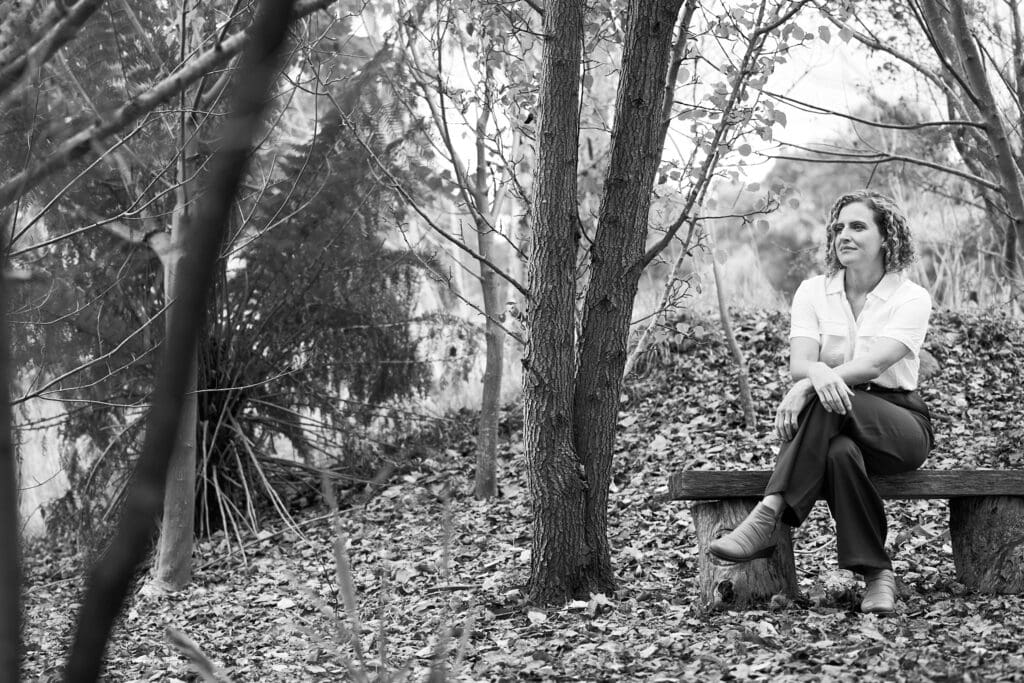
In my work, I am dedicated to bringing spirituality into the healthcare conversation in a gentle yet effective manner.
Learn more about my services for healthcare professionals, explore my academic work, and feel free to view my book, The Suffering of a Child.
References:
Balboni, T., VanderWeele, T., Doan-Soares, S., Long, K., Ferrell, B., Fitchett, G., Koenig, H., Bain, P., Pulchalski, C., Steinhauser, K., Sulmasy, D. & Koh, H. (2022). Spirituality in serious illness and health. JAMA, 328(2), 184-197. doi:10.1001/jama.2022.11086
Best, M., Jones, K., Merritt, F., Casey, M., Lynch, S., Eisman, J., Cohen, J., Mackie, D., Beilharz, K. & Kearney, M. (2024). Australian patient preferences for discussing spiritual issues in the hospital setting: An exploratory mixed methods study. J Relig Health, 63(1), 238-256. doi:10.1007/s10943-023-01767-x
Brew, L. (2024). Integrating Holistic Care in Nursing Practice: Approaches and Benefits. Journal of Advanced Practices in Nursing, 9(4), e1-2. doi:10.37421/2573-0347.2024.9.391
Carey, L., & Mathisen, B. (2018). Spiritual care for allied health practice. London: Jessica Kingsley Publishers.
Gardner, F., Tan, H., & Rumbold, B. (2020). What spirituality means for patients and families in health care. Journal of Religion and Health, 59(1), 195-203. doi:http://dx.doi.org/10.1007/s10943-018-0716-x
Koenig, H. (2013). Spirituality in Patient Care. PA: Templeton Press.
Long, K., Symons, X., VanderWeele, T., Balboni, T., Rosmarin, D., Puchalski, C., Cutts, T., Gunderson, G., Idler, E., Oman, D., Balboni, M., Tuach, L. & Koh, H. (2024). Spirituality as a determinant of health: Emerging policies, practices, and systems. Health Affairs, 43(6), 783-790. doi:10.1377/hlthaff.2023.01643
McColl, M. A. (2022). A graduated approach to spiritual intervention in health and long-term care. Religions, 13(8). doi:10.3390/rel13080743
World Health Organisation. (2021). The Geneva charter for well-being. Retrieved from WHO Online Publications: https://www.who.int/publications/m/item/the-geneva-charter-for-well-being


